- Published 01.12.2026
- type News
Summarize with:
A thesis rooted in artistic teaching practices
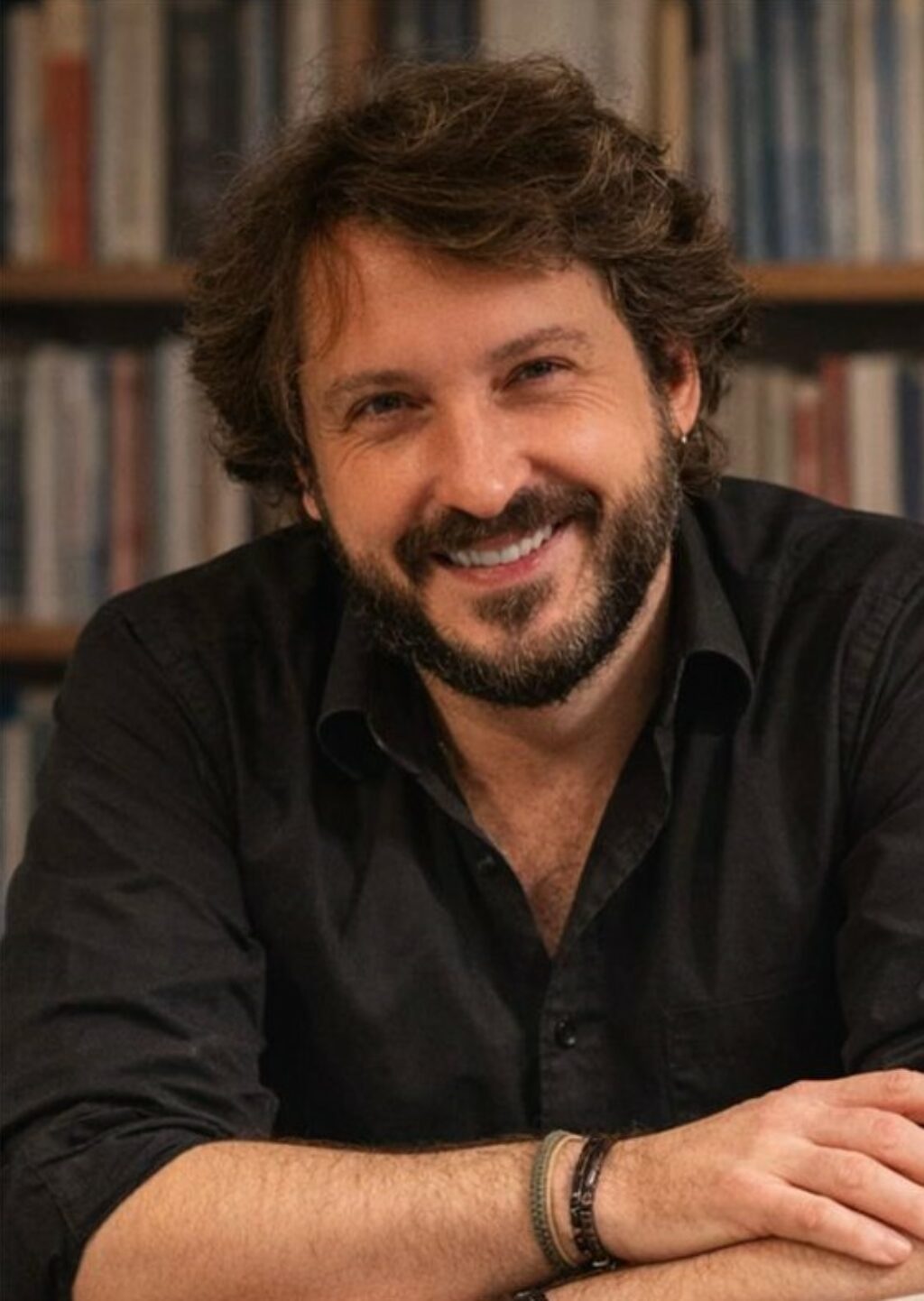
ESMA – Réseau Écoles Créatives has joined forces with the Université Lumière Lyon 2 to co-direct the doctoral research of Xavier Aliot, teacher and author, into the pedagogical conditions that enable students in creative schools to develop an authorial posture as part of their training.
Entitled Didactique de l’intime: quelles conditions pour faire advenir un auteur (Didactics of intimacy: what conditions are needed to bring an author to life), this thesis is at the crossroads of artistic teaching practices and educational science research. It examines the support methods used in creative schools, as well as the institutional and symbolic frameworks in which the act of creation takes place.
In particular, the research explores the place of emotion, personal experience and intimacy in the creative process, the pedagogical devices used in arts training – workshops, writing, images, narration, mediation – and the role of the pedagogical framework in supporting students throughout their training.
The thesis is co-supervised by :
- Sylvain Fabre, thesis director, University Professor in Education Sciences at the Université Lumière Lyon 2, scientific director of the ECP laboratory;
- Sandra Mellot, co-supervisor, Director of the Lab des Écoles Créatives, PhD in information and communication sciences.
This collaboration embodies the desire to bring together academic research and practical experience in the field, in the service of educational innovation and the training of future creative artists.
The voice of a doctoral student – Questions to Xavier Aliot
To better understand the origins of this research and the questions it raises, Xavier Aliot looks back over his career and the issues that are currently affecting design schools.
-
What is it about your own career that made you want to work on the place of intimacy and emotion in artistic creation?
It’s a question that first arose from a difficulty I encountered as a script teacher. Beyond the theoretical dimension that can be transmitted (knowledge of narratology, for example), beyond even the practice of screenwriting, which must respond to codes and forms, and which can be improved through script-doctoring work, students are faced with a strange injunction: from one day to the next, they are asked, and sometimes even imposed for the purposes of their training, to produce an original story. As a result, they find themselves obliged to adopt an authorial stance, with all the responsibility that this entails, vis-à-vis the audience, the teaching team and themselves, in terms of the aesthetic choices they make and the subjects they tackle.
It would be a mistake to ignore this dimension, which requires them to take on the role of artist or author, only to focus on the production of a story on the surface. A film is a form, but it is also a substance.
There is therefore a teaching and educational engineering issue to be addressed in the support given to students, who often come to film school to pursue a technical career.
Like my students, I was initially a learner of cinema ‘through technique’, then I moved towards a position of author and artist. Eventually I found myself teaching this form of expression and the techniques I had learned at ESMA and Cinécréatis. But teaching can’t be improvised, and I gradually felt that I was lacking in pedagogical skills. That’s why, in 2023, I took a master’s degree in education at the Université Paul-Valéry and wrote a dissertation on the autonomy of art school students. It was an intense and highly stimulating time: coming face to face with erudite researchers, being challenged, and feeding both my intellectual thinking and, in very practical terms, my day-to-day teaching practice. So it was quite naturally a research adventure that I wanted to continue with this doctorate.

All of this led me to formulate a research project that excited ESMA’s management and that resonated with the research carried out by the Lab des Écoles Créatives directed by Sandra Mellot. The project also attracted the interest of Sylvain Fabre, a researcher associated with the Education, Culture and Politics laboratory at the Université Lumière Lyon 2, who has a doctorate in philosophy and educational science and whose research focuses in particular on arts education and the didactics of the arts. This shared interest has given rise to this partnership and has propelled me enthusiastically into this major challenge: to reflect on and propose conditions that would enable art school students to move towards an authorial posture by exploring their inner landscape.
-
As a researcher immersed in creative schools, what surprises or moves you most about the students?
We’re at the very beginning of the research: there’s still a lot to be framed, defined and explored. Sylvain Fabre and Sandra Mellot and I are laying the foundations. First of all, we need to get the discipline right, define our ambitions and sometimes broaden them, formulate our questions and hypotheses, and find the right methodology to consolidate our findings and provide practical material for teachers.
The times we live in are complex, everyone will know why, and future filmmakers will be expected to help us understand this world. Yet it is precisely in this world that these young people are being trained, in direct contact with a host of injunctions, stimuli and constraints, as well as opportunities and changes that are already shaking up our short-term habits. It’s deeply destabilising.
It’s a chance, of course, to be given the opportunity to express yourself and make films that are likely to be seen by an international audience, but it can also generate a lot of anxiety. They are asked to be “original”, to “show their guts”, as we often say. And the young adults that they are strive to meet this expectation by mobilising biographical material that can sometimes expose them, or put them in difficulty, on a psychological side that is still under construction, still being questioned.
As an author and artist, and like many of them, I am convinced that you can only really invent from what you have experienced, felt or known and documented through emotion. The great sensitivity and empathy that artists possess enables them to absorb and share the emotions of the people they work with, but also to hear and sometimes amplify their own emotions, until they spill over and need to be expressed. I recognise this heightened empathy in many of them, and it’s undoubtedly what touches me the most.
But this sensitivity can also resemble an inner chaos, made up of erratic movements that we have to learn to listen to and organise into words, images and rhythm. It’s a question of transforming this disorder into form, not to expose yourself, but to address an audience and, ultimately, to help them better understand your own emotions. Learning to guide yourself so that you, in turn, can guide others is a major responsibility.
All the more so in a world where it is becoming increasingly difficult to distinguish authentic images from misleading and manipulative fiction. Stories and their authors shape human civilisations, and cinema, like video games, is a major soft power today. It will be the responsibility of today’s students, tomorrow’s students, to take the measure of these issues.
-
If you had to sum up your thesis in one sentence, what would it be?
To find the teaching conditions capable of igniting in students the same light that slowly led me to become an author and artist.
Discover all the news
-
 3D Animation & FX
Five ESMA films join the Disney+ catalogue
02.18.2026 -
 3D Animation & FX
Update on the 3D animated film selections for January 2026
02.02.2026 -
 3D Animation & FX
ESMA partner of the Annonay International First Film Festival
01.27.2026 -
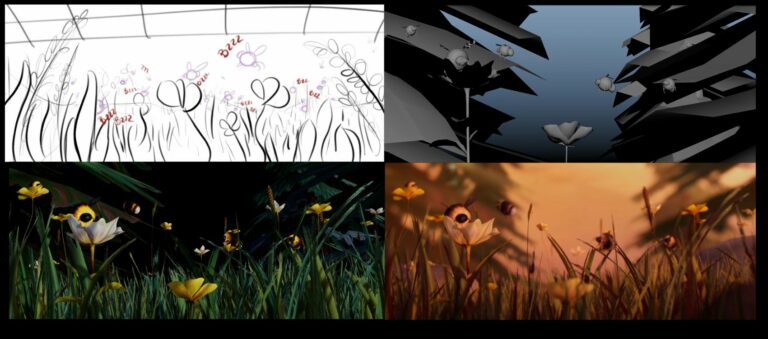 3D Animation & FX
animatics
01.19.2026 -
 Video Game
ESMA GAME SHOW: a 100% video games day in Montpellier
01.14.2026 -
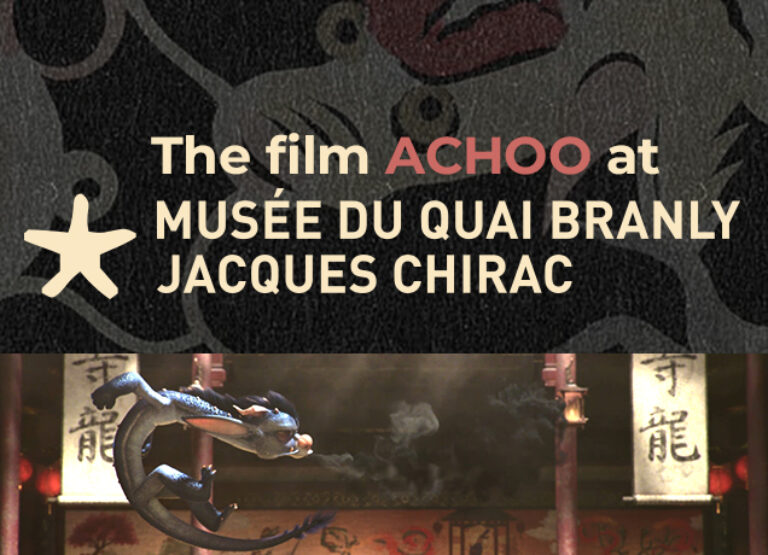 3D Animation & FX
When an ESMA dragon enters a museum: Achoo joins the DRAGONS exhibition at Quai Branly
01.08.2026