- Published 03.10.2026
- type Thematic news items
- Training 3D Animation & FX
Summarize with:
Although technology has evolved and today's animated films are nothing like yesterday's, certain aspects of the craft remain more or less unchanged. Do you know the twelve basic principles of animation? The famous squash and stretch, or the art of pose to pose, and that of slow in and slow out... Beyond this jargon, there is a whole set of more or less implicit laws that the animation industry has integrated to stage reality (or distort it). Put into practice by the first animators at the Walt Disney studios, these principles, which had been thought through and reworked many times, were put down on paper for the first time in 1981. More specifically, in The Illusion of Life, co-authored by studio veterans Ollie Johnston and Frank Thomas, both renowned animators. Below, we take a look at these principles, which have since been adopted by almost the entire industry.
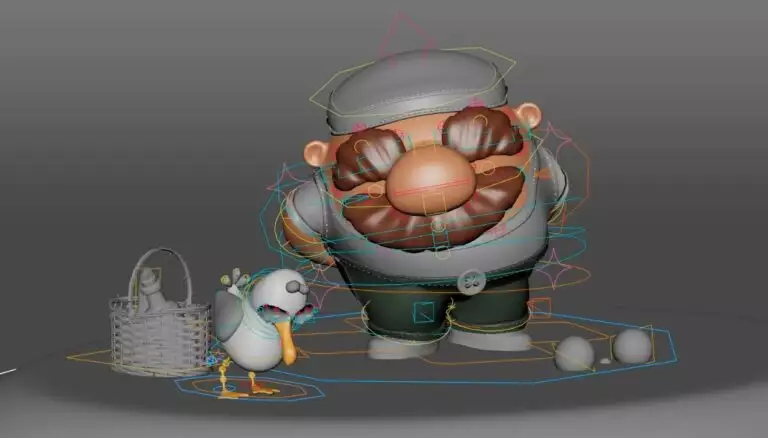
1. Compression and stretching
This principle, better known as Squash and Stretch, involves giving a point and flexibility to objects and characters created in cartoon or computer animation.
The most obvious example is a bouncing ball that deforms when it comes into contact with the ground or an object (in the anime Blue Lock, the exaggerated deformations of the ball coming into contact with a kick are a good illustration of this compression) but this principle actually applies to all animated or inanimate beings in an animation project. In realistic animation, it is also important that the volume of the object is respected, despite its deformations. In more cartoony animation, this principle can be taken to extremes to reinforce the comic effect.
2. Anticipation
In the same way as live-action cinema, animated films use off-screen effects and anticipation to attract the viewer’s attention. But animation can also reinforce the anticipation of movement by preparing the audience for an action in an exaggerated way, in the manner of a Gallic hero well known to the French, preparing his masterful punch before sending a Roman soldier flying through the air. In Ballerina, a French-Canadian animated film by Éric Summer and Éric Warin, Félicie and her friends’ knees bend before the dance step, anticipating the movement and creating the illusion of reality.
3. Staging
When a script is transposed into a film or animated series, the filmmaker and his teams are literally stagingit . This stage, which generally begins with the storyboard and is then continued by the layout, lighting and animation teams, is where the entire audiovisual narrative is constructed.
In this sense, this principle is not exclusive to animated film, as it is also found in theatre, or in live-action films and television series. But in animation, where you start from a blank page or an empty screen, thinking about this aspect of the project is crucial. For those wishing to enrol on our 3D animation course, having a knowledge of directing is an asset that this course, which combines film theory and practical skills, will reinforce.
4. Continuous animation or shot by shot
In animation, there are (or at least there were) two approaches. One is continuous animation, which consists of drawing scenes and actions frame by frame. On the other, pose-by-pose, which consists of defining key images and building fluid intervals between them.
In 3D animation, this second technique is generally the most widely used, thanks in particular to the computing power of today’s computers. Real-time animation in tools such as Unreal Engine or Unity further enhances the speed of pose animation.
That said, continuous animation allows greater freedom (especially in 2D), and it is often this technique that gives rise to the most daring short films or episodes.
Today, a mixture of these two approaches is still common.
5. Follow Through & Overlapping Action
By applying this principle, animators guarantee a realistic rendering by drawing direct inspiration from reality and the physical laws that govern it, in particular the principle of inertia. For example, a character who stops suddenly will see his hair continue to run, or even parts of his body if this principle is exaggerated, as is the case in many episodes of Tom and Jerry.
Overlapping, on the other hand, is a principle inspired by the reality that each part of a body moves at its own pace. So in a character running for a jog, hands, arms, hair and head will each have different movements that need to be animated to give the illusion of realism.
These are details that may seem insignificant, but which can break the viewer’s suspension of disbelief and take them out of the film if they are badly handled.

6. Slow In & Slow Out
Linked to pose animation, this principle of slowing down means that an object or body that starts moving does so through progressive acceleration and deceleration, with an episode of slow in and slow out at the beginning and end of the movement. To take the example of the bouncing ball, it slows down and deforms on contact with the ground, before rebounding and deforming in the opposite direction as it rises.
When the intervals are created (or when the drawings are made, in the case of continuous animation), an additional number of images will be needed to account for this deformation and slowing down.
In 3D animation, this type of image is calculated more or less automatically, but it is by playing with these parameters that you can also create interesting effects, and give a unique character to the animation while exploiting its basic principles.
7. Arched trajectory
Throw a ball horizontally and it will land on the ground after a curved trajectory. Throw the same ball higher, in the same direction, and the arc of its trajectory will change. Throw it at the same angle, but harder, and the arc will be different again.
As you can see, this principle of trajectory can also be found in animated films, always with the aim of providing a realistic representation of the world around us. Here, we’re of course thinking of sports anime such as Prince of Tennis or Slam Dunk, but this principle can also be found in very simple actions, such as holding out your hand towards a character or an object. In Rapunzel, when Flynn stretches out his hand to shake the hoof of the cantankerous horse Maximus, his arm and hand form an arc which, if it weren’t drawn in accordance with the physics of a human body, might appeal to the viewer.
8. Secondary action
As mentioned above, animated film is about creating a world from scratch, as opposed to live-action film, which captures live action to create a story. As a result, it is important to bear in mind that the way in which animated characters move is crucial to ensuring that the audience does not lose interest. In the same way that two actors rarely stand still during a dialogue, adding movements, tics and emotions to a face during a conversation between two characters will give your animation more depth and generate empathy.
In a film like Vice Versa, it’s the subtlety of these non-verbal elements that enrich the story and make it one of the great successes of Pixar Studios, who have become masters in the art of breathing life into their work.

9. Timing
Just as slow in and slow out have an impact on animation, timing is also key to the rendering of your shot. It is also through this principle that you can give body to your objects and characters. The different characters in Zootopie 2 move with different timings depending on their weight, size, species and state of mind. And that’s essential if you want to give your protagonists a unique identity.
10. Exaggeration
Forget everything that’s been said so far. Or rather, integrate it so that you can then put it aside. Exaggeration reveals the full power of animation from the masters of Disney. A whale like Monstro in Pinocchio becomes a monster with a gigantic, deformed mouth, while skeletons like those in Silly Symphonies literally make some of our favourite heroes’ eyes pop out of their heads.
Donald, Goofy, Mickey and their friends have always been the best playground for Disney animators. And many animation studios have followed in their footsteps, from Looney Tunes to Scooby Doo and Sponge Bob. Exaggeration is also at the heart of anime aesthetics , an aesthetic that KPop Demon Hunters draws on directly for its comic relief.
11. Volume drawing
Although this principle is less difficult to apply to computer animation, it is clear that for Disney animators, it was essential to consider characters in volume. A character drawn in 2D obviously has its own content and volume, and failure to take this into account can lead to disturbing results. To understand the basics of drawing in volume, Disney animators regularly used live models, both static and moving, to get as close as possible to reality in their drawings.
12. Charisma (Appeal)
Finally, a character’s charisma, like that of an actor or actress, depends as much on the character designer as on the animator. Well-known heroines such as Elsa or Vaiana, or animated figures such as Miles Morales or Gru from Despicable Me could not have achieved such renown without an attractive, impactful or devilishly funny design, as is the case with Illumination’s Minions.
Twelve principles to bear in mind when embarking on the development of any animation project, and principles that are as relevant today as ever.
Discover all the news
-
 3D Animation & FX
Update on the selection of 3D animated films for June 2026
07.03.2026 -
 3D Animation & FX
COWS in the Top 15 at the Student Academy Awards
06.23.2026 -
ESMA Montpellier and ESMA Toulouse have been awarded RECA accreditation
06.17.2026 -
 3D Animation & FX
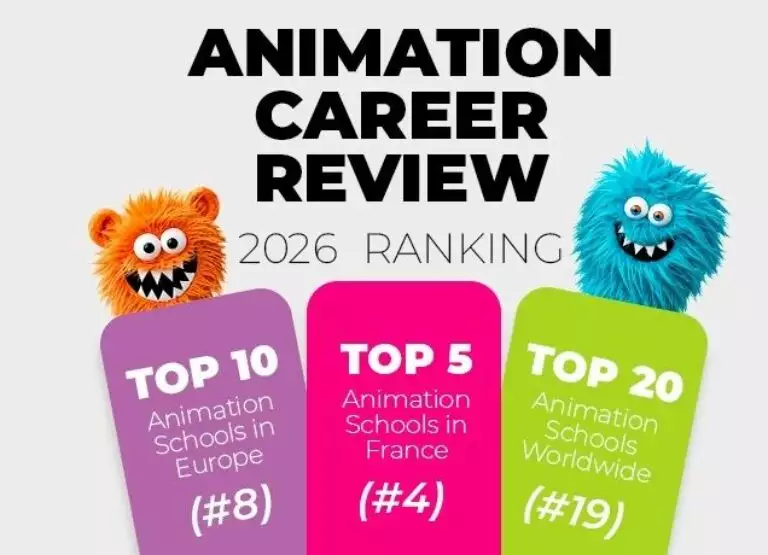
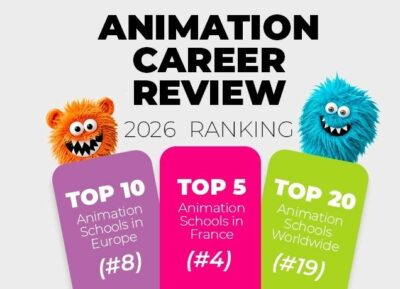
Animation Career Review 2026 Ranking: ESMA Confirms Its International Standing
06.12.2026 -
 3D Animation & FX
ESMA is expanding its international reach through Women in Animation
06.09.2026 -
 3D Animation & FX
Annecy 2026: an exceptional week awaits ESMA students
06.08.2026