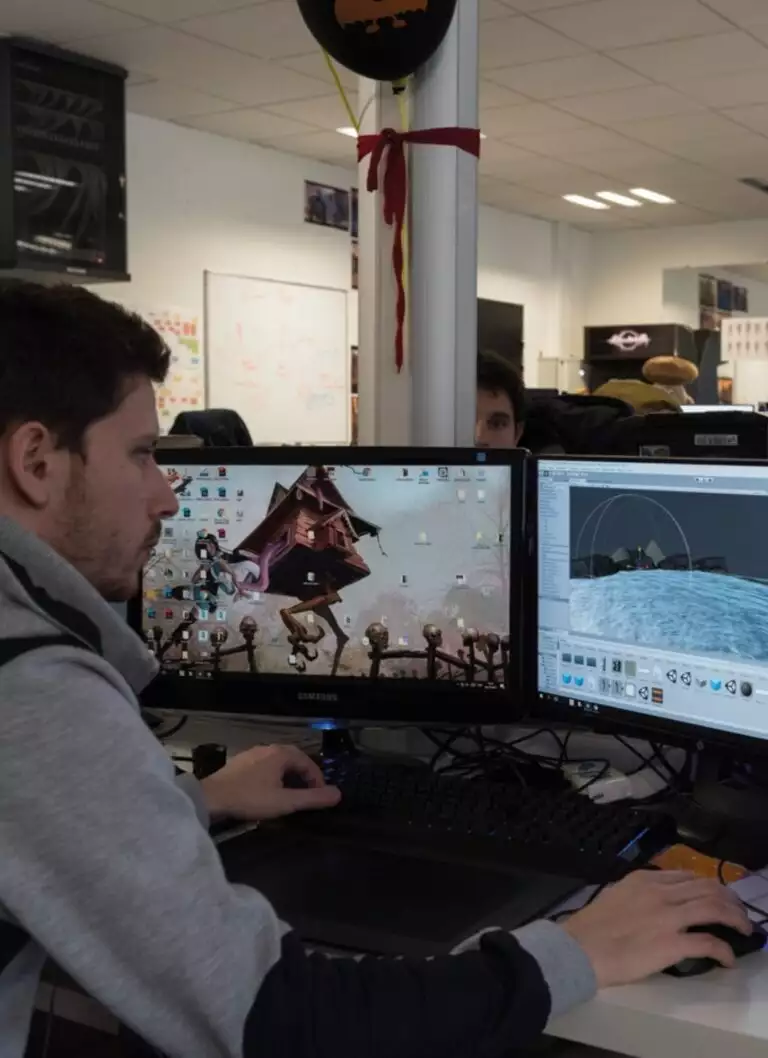
- Training Video Game
A QA tester helps make sure a video game works properly before and after release. Their job is to find bugs, technical issues, gameplay problems, and usability flaws so the development team can improve the game before players experience them. To become a QA tester, you need a good understanding of games, strong attention to detail, clear communication, and practical knowledge of testing methods, tools, and game production workflows.
What does a QA tester do in video games?
A QA tester, or quality assurance tester, checks a game carefully to identify bugs, glitches, technical issues, and gameplay problems. Their goal is to help the team release a more stable, polished, and enjoyable game.
QA testers examine many parts of a game, including gameplay, controls, interface, graphics, audio, performance, and overall stability. They do not simply play the game for fun. They test features methodically, repeat actions, and look for anything that breaks, behaves unexpectedly, or creates a poor user experience.
Their work also includes writing detailed bug reports. A good report explains what happened, where it happened, how to reproduce it, and how serious the issue is. QA testers may also include screenshots, videos, or exact steps so developers can investigate the problem more efficiently.
Once a bug has been fixed, the QA tester checks it again to confirm the issue has been resolved and to make sure no new problems have appeared. They may also verify that the game works correctly across different platforms, languages, and regions.

Why QA testing is important in game development
QA testing is an essential part of video game production. Even a strong concept or beautiful art direction can be damaged by technical issues, broken mechanics, poor balance, or unstable performance.
A good QA process helps teams:
- Detect bugs before release
- Improve gameplay quality and usability
- Reduce technical issues across platforms
- Support smoother launches and updates
- Protect the player experience
This is especially important in modern game development, where players expect games to be polished, functional, and regularly updated.
Skills you need to become a QA tester
To become a QA tester, you need a mix of technical understanding, methodical thinking, and communication skills. It is a role that requires patience, precision, and consistency.
Key skills include:
- Strong attention to detail so you can spot bugs, inconsistencies, and edge cases
- Analytical thinking to understand what caused a problem and how to reproduce it
- Patience and perseverance because testing often involves repeating the same actions many times
- Clear written communication for useful and detailed bug reports
- Verbal communication to discuss issues constructively with developers and other team memberso
- Organisation and time management when dealing with multiple issues or deadlines
- Knowledge of game genres, player behaviour, and gameplay logic
- Understanding of platforms such as PC, console, and mobile
- Familiarity with testing workflows and production cycles
- Basic technical knowledge to understand engines, tools, and bug-tracking systems

Tools and software used by QA testers
QA testers use a mix of testing methods, development tools, and technical systems. The exact tools vary depending on the studio and project, but the goal is always the same: identify issues clearly, document them properly, and help improve the game.
Useful tools and software knowledge can include:
- Game engines such as Unity and Unreal Engine
- Bug-tracking and reporting tools
- Performance and profiling tools
- Manual and automated testing workflows
- Programming or scripting basics in languages such as C#, C++, or JavaScript
- Test frameworks used for structured and repeatable testing
For many entry-level roles, you do not need to master every technical tool from the beginning. What matters most is being able to test carefully, report clearly, and understand how your work fits into the wider development pipeline.
How to become a QA tester step by step
Build a strong understanding of video games
Start by understanding how games are designed, built, tested, and released. A QA tester needs more than a passion for gaming. You need to understand mechanics, progression, interface design, player experience, and how different systems interact.
Learn how game production works
QA testers work with designers, artists, programmers, and producers. That is why it helps to understand the stages of game development, from concept and prototyping to production, testing, launch, and post-release updates.
Practice structured testing
Good QA work is systematic. Practice identifying bugs, reproducing issues, documenting them clearly, and thinking about how a player might break or misuse a system. This is very different from casual play.
Improve your technical foundation
You do not always need advanced programming skills to start in QA, but technical knowledge is a real advantage. Familiarity with engines, platforms, performance issues, and scripting basics can help you work more effectively and progress faster.
Build project-based experience
The best way to grow is to work on real or realistic projects. Student games, game jams, collaborative productions, and personal testing exercises can all help you understand how QA works in practice.
Learn how to write strong bug reports
A strong bug report is one of the most important skills in QA. You should be able to explain a problem clearly, describe how to reproduce it, and communicate its impact in a useful way.
Apply for entry-level roles and keep improving
Many people begin with junior or entry-level QA roles and then move into more specialised areas. With experience, some testers grow into automation, technical QA, QA engineering, or lead QA positions.

Can you become a QA tester with no experience?
Yes, it is possible to become a QA tester with no professional experience, especially in junior or entry-level roles. However, you still need to show that you understand how testing works and that you can approach games in a structured, professional way.
A good way to make up for limited experience is to build evidence of your skills through:
- Student game projects
- Personal bug-report samples
- Game jams
- Collaborative projects
- Technical practice with engines and testing tools
- Clear understanding of production workflows
Even without formal work experience, showing that you know how to test methodically can make a big difference.
How long does it take to become a QA tester?
There is no single timeline because it depends on your background, technical level, and how quickly you build relevant experience.
In general:
- Some people develop enough entry-level skills in a matter of months
- Others take longer if they are also learning game development foundations
- A full specialised training course can provide a stronger and more complete path into the industry
The most important point is not speed alone. It is whether you can demonstrate the right skills, discipline, and understanding of the testing process.
Which studies can help you become a QA tester?
A scientific or technical academic background can be useful, especially if it includes mathematics, computing, or digital subjects. However, the most important thing is developing the right combination of technical understanding, testing discipline, and game-production awareness.
After secondary school, a specialised video game course can be a strong path into QA because it helps you understand the wider production environment. QA testers work across gameplay, systems, interface, and technical performance, so broad exposure to game creation is very valuable.
Training to become a QA tester
A specialised higher-education course in video games is one of the clearest ways to prepare for this profession. Strong training can help you understand game design, production pipelines, engines, collaborative workflows, and the technical context in which QA testing happens.
ESMA’s video game training gives students the opportunity to work on different stages of game creation, from concept to production. That broader understanding is useful for future QA testers because quality assurance is connected to every part of the development process.
QA tester salary
QA tester salaries vary depending on experience, location, specialisation, and studio type. That is why it is more useful to present salary as a range rather than as a single figure.
A practical benchmark is:
- Entry level: $43,000 to $58,000 USD per year
- Mid level: $60,000 to $78,000 USD per year
- Senior level: $85,000 to $116,000+ USD per year
A simple summary is that many QA tester roles fall broadly in the $43,000 to $78,000 USD range, while more experienced professionals, lead testers, and specialised QA roles can move beyond $100,000 USD depending on the market and level of responsibility.
Career opportunities for QA testers
QA testing can be a strong starting point for several career paths in games and software. After gaining experience, QA testers may move into roles with more responsibility or greater technical depth.
Possible progression paths include:
- Senior QA tester
- Lead QA tester
- QA engineer
- Automation-focused QA roles
- QA architect
- Technical production roles
- Project coordination or analytical roles
The skills developed in QA are also useful beyond video games. Testing, reporting, process discipline, and usability awareness are valuable in many digital and technology sectors.
Why study video games to become a QA tester?
QA testers work closely with many parts of the production pipeline, so it helps to understand how games are designed, built, tested, and improved. A strong video game education can give you that broader perspective while also helping you develop technical confidence and collaborative skills.
ESMA’s video game training is a strong path for students who want to understand the full game-creation process and prepare for careers in the industry. The programme helps students develop practical production knowledge while working on complete game projects.
FAQ
What does a QA tester do in video games?
A QA tester checks a game for bugs, glitches, technical issues, and usability problems. They document issues clearly, retest fixes, and help improve the overall quality of the game before and after release.
Do you need a degree to become a QA tester?
No, not always. It is possible to become a QA tester without a degree, but structured training can still help you build stronger technical skills, project experience, and production knowledge.
Can you become a QA tester with no experience?
Yes, especially in entry-level roles. However, you still need to show that you understand testing methods, bug reporting, and game production workflows.
How long does it take to become a QA tester?
It depends on your background and training path. Some people build entry-level skills in a few months, while others take longer as they develop a stronger technical and production foundation.
What skills are most important for a QA tester?
Attention to detail, analytical thinking, patience, communication, organisation, and a good understanding of how games work are all important for QA testing.
How much does a QA tester earn?
Many QA tester roles fall broadly in the $43,000 to $78,000 USD range, while senior, lead, or specialised QA roles can earn more, sometimes exceeding $100,000 USD depending on experience and market conditions.