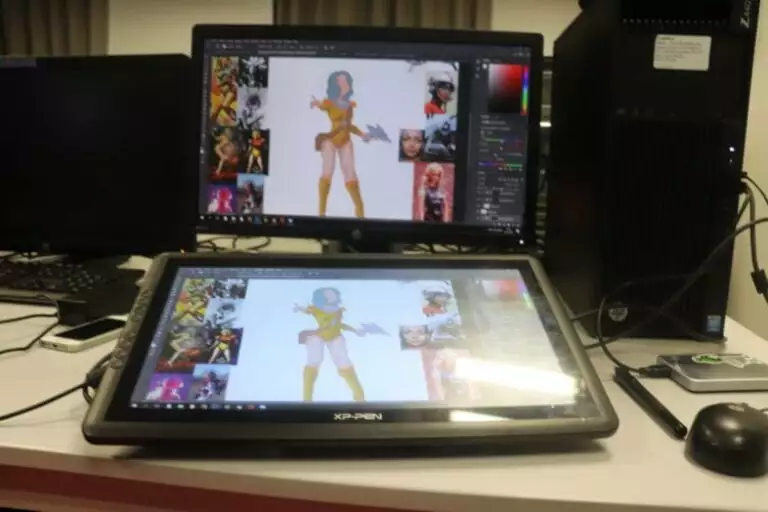
A colourist is a visual professional who uses colour to strengthen the mood, clarity, and consistency of an image. To become a colourist, you need strong artistic foundations, a solid understanding of colour theory, confidence with digital tools, and a portfolio that shows you can work across visual storytelling projects such as animation, comics, games, or print.
What does a Colourist do?
A colourist works with colour as both a technical tool and a creative language. Depending on the project, the role may involve choosing palettes, balancing tones, adjusting light and shadow, and making sure the final visual result feels consistent and expressive. In creative industries, colourists help reinforce atmosphere, guide the viewer’s eye, and support the artistic direction of a project.
Colourists can work in several fields, including:
- Comics, where they apply colour, light, and shadow to finished drawings
- Animation, where they help maintain visual harmony and support storytelling
- Video games, where colour choices must work across different screens and environments
- Print and graphic design, where colour accuracy and output quality are essential
Skills you need to become a Colourist
To become a colourist, you need more than technical knowledge. The role combines observation, artistic judgement, and precision.
Key skills include:
- Strong understanding of colour theory, contrast, harmony, and visual perception
- Sensitivity to mood, atmosphere, and storytelling
- Attention to detail and consistency
- Ability to work with digital software and evolving production tools
- Communication skills for working with directors, illustrators, designers, or production teams
A good colourist also knows how to adapt. The visual needs of a comic page are different from those of an animated sequence or a game environment, so flexibility matters.
How to become a Colourist: Step by Step
1. Build strong artistic foundations
Start with drawing, composition, colour theory, and visual analysis. A colourist needs an excellent eye and a clear understanding of how colour affects perception.
2. Learn digital tools
Modern colour work depends on software. Competitor career pages frequently mention tools used in image editing and post-production, which shows that technical fluency is expected in the market.
3. Practice on real projects
Work on student films, illustration projects, comics, design briefs, or personal work. Practical experience helps you understand continuity, style adaptation, and production constraints. ScreenSkills also emphasizes building a portfolio early because it is essential for entering the field.
4. Build a portfolio
Your portfolio should show range, but it should also show control. Include work that demonstrates palette choices, lighting, consistency, and your ability to support a creative brief.
5. Follow a structured creative training path
A strong course can help you develop technical skills, artistic judgement, and project discipline. If you want to prepare for careers linked to visual development, storytelling, and image production, Our Illustration & Concept Art programme is the most relevant internal path to feature on this page. Your broader artistic environment at ESMA and adjacent digital pathways such as Multimedia Graphic Design can also support related skills and career development.
Where can a Colourist work?
A colourist may work as a freelancer or as part of a studio team. Depending on specialization, opportunities may exist in animation, comics, games, design, publishing, or post-production environments. Competitor pages also frame colourist work as collaborative, with regular interaction across creative and technical teams.
This means the profession can suit different career models:
- freelance creative work
- studio-based production work
- project-based collaboration
- long-term development within visual or post-production teams
Colourist salary and career progression
Colourist salaries vary widely depending on country, specialization, experience level, and whether the work is freelance or salaried. For that reason, broad salary figures should always be treated as indicative rather than fixed. Career pages in this space show that entry-level pay is usually lower, while experienced professionals can move into more senior creative or supervisory roles.
With experience, a colourist may progress toward roles involving creative supervision, project coordination, technical leadership, or broader visual direction.
Common Asked Questions
What qualifications do you need to become a colourist?
There is no single mandatory qualification, but most career paths combine artistic training, digital skills, and a strong portfolio. Competitor career pages repeatedly highlight formal study, software skills, and hands-on experience.
Do colourists need to know software?
Yes. The profession increasingly depends on digital tools, and several ranking pages explicitly mention industry software as part of the role.
Can a colourist work in animation?
Yes. Animation is one of the clearest specializations connected to this role, alongside comics, games, and visual production.
Is colourist a freelance job?
It can be. Colourists may work freelance or in salaried roles depending on the industry and project type.